Common Issues with UNI-T Test Instruments
November 17, 2026MR TOOLS Team
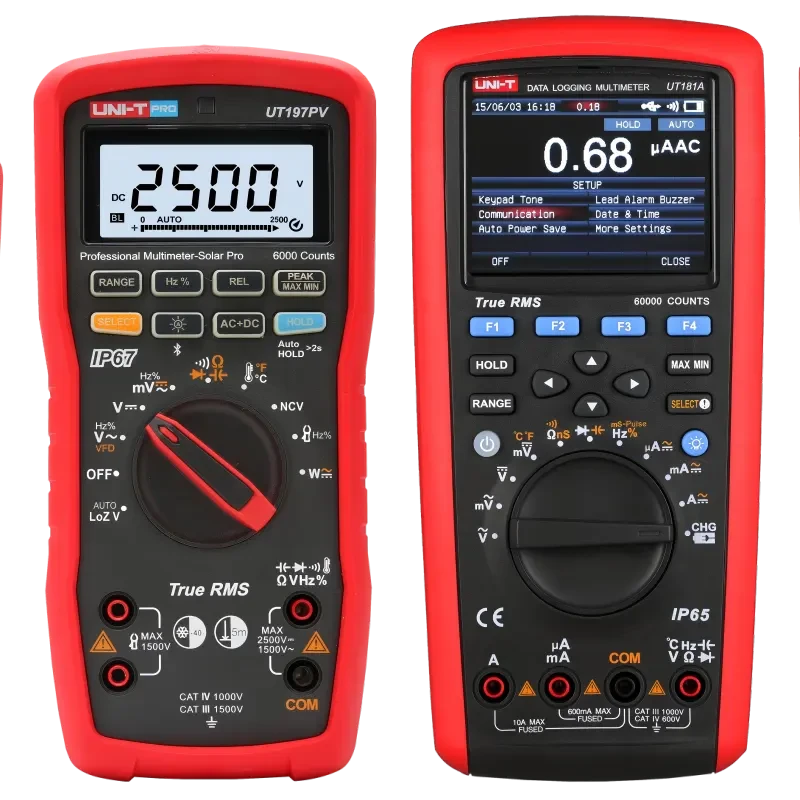
Whether you are a seasoned electrician or a DIY enthusiast, understanding your testing instruments is key to getting accurate results. At UNI-T, we frequently receive technical questions regarding multimeters, clamp meters, and thermal imagers. In this guide, we’ve compiled answers to the most common questions to help you troubleshoot issues and measure with confidence.
Whether you are a seasoned electrician or a DIY enthusiast, understanding your testing instruments is key to getting accurate results. At UNI-T, we frequently receive technical questions regarding multimeters, clamp meters, and thermal imagers. In this guide, we’ve compiled answers to the most common questions to help you troubleshoot issues and measure with confidence.
1. Multimeter Basics: Accuracy, Zeroing, and True RMS
Why does my multimeter display fluctuating numbers in the mV range?
In small voltage ranges (like DC/AC millivolts), the input impedance is extremely high. It can easily pick up ambient electromagnetic waves when the test leads are open. This is normal. If you short the test leads together, the reading should return to zero.Understanding Accuracy:
Accuracy is expressed as a percentage of the reading plus a digit. If a meter has an accuracy of ±(1% + 2) and you measure 100V, the actual reading could be between 99.8V and 101.2V.True RMS vs. Average Responding:
For pure sine waves, both meters are accurate. However, for distorted or non-sinusoidal waveforms (like square or sawtooth waves), only a True RMS meter calculates the accurate root-mean-square value.Why is my resistance reading negative when test leads are shorted?
This is usually caused by high humidity. Moisture can get into the grease (Vaseline) on the PCB dial. Wipe off the old grease and reapply a fresh layer, or wait for the weather to dry out.
2. Preventing Instrument Damage
Are all ranges protected on my multimeter?
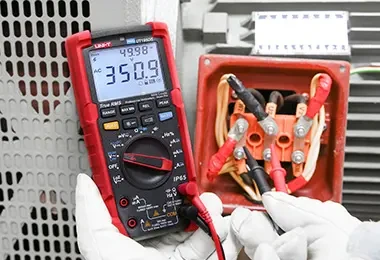
Current ranges are protected by fuses. Voltage ranges have 10MΩ internal resistance. However, the resistance range generally has no high-voltage protection. If you accidentally measure voltage in resistance mode, the two voltage sources clash and will likely burn out the circuit.Why are current and resistance readings inaccurate while voltage is fine?
If the meter is calibrated but only current/resistance is off, the problem is likely your test leads. The internal copper wire may be broken due to improper storage (like tight wrapping). Try replacing the test leads.Why doesn't my multimeter beep in continuity mode?
If the buzzer fails and other ranges also stop working simultaneously, the MCU control chip may be damaged. This requires factory repair.
3. Clamp Meter Essentials
Why is my clamp meter reading zero on a power cord?
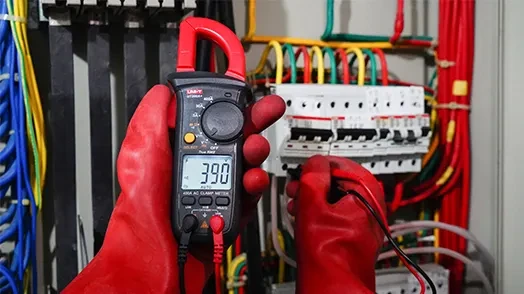
Clamp meters measure the magnetic field of a single conductor. If you clamp both live and neutral wires together, their magnetic fields cancel out, resulting in a zero reading.Why doesn't the AC/DC current read zero?
For AC, the Hall effect sensor is sensitive to environmental electromagnetic interference—this clears during measurement. For DC, residual magnetism in the clamp head may cause a baseline reading after measuring high currents. Simply press and hold the "REL" button to zero it out.How to use the Inrush Current function?
With the power off, clamp the cable. Press the "INRUSH" button, and then turn on the power. The meter will capture the peak starting current.What is NCV?
Non-Contact Voltage detection. Bring the clamp head near a wire. If the voltage exceeds the threshold (e.g., 100V), the buzzer sounds and the LED flashes.
4. Thermal Imager and IR Thermometer Tips
Why is my IR thermometer inaccurate?
Check the Distance-to-Spot Ratio (D:S) and Emissivity. Ensure your target is larger than the measurement spot. Most organic and painted materials have an emissivity of ~0.95. If the target is reflective metal, adjust the emissivity down.How to find an unknown emissivity?
Apply a piece of black electrical tape (emissivity 0.95) to the object. Measure the tape with the IR thermometer, then cross-check with a contact thermometer. Adjust the IR meter's emissivity until the readings match.Why does my clamping earth resistance tester keep beeping on startup?
This is by design. The clamp head emits a high-power magnetic field to induce current for measurement. The beeping is normal and does not affect accuracy.